 |
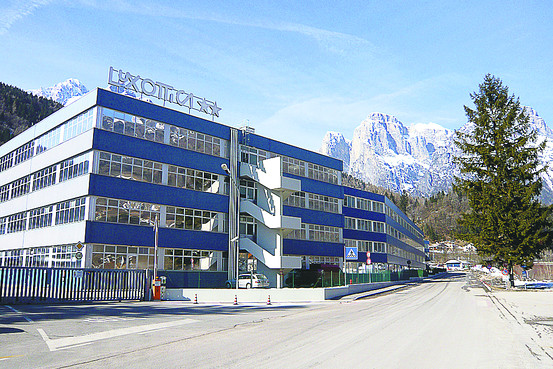
| Luxottica HQ in Italy |
Sunday, 7 July 2013
Luxottica...an eye for vertical integration


Saturday, 2 March 2013
Fake or Counterfeit - Whats the difference?
Both fakes and counterfeits are a huge concern in the luxury industry, but is there a difference between them? Yes, and knowing the difference can make a huge difference to how a lux company would deal with the problem at hand.
Fake: These are products which have the brand name on it but no attempt is made to hide that it is not the "real thing". Either the product is not a part of the lux brand (say a Rolex perfume or suit) or is made with a different design or made with such inferior raw materials that customers are in no doubt to the product being not the real McCoy. Fakes are also sold as such very openly to customers in designated markets (albeit shady ones) as a fake or replica at a much lower price. Customers go to these markets with the intention of buying a fake.
Counterfeit: These are products that are made and sold as the genuine product on unsuspecting customers. The product quality is maintained (mostly) and sold in regular lux retail outlets. The price is also not discounted as in Fakes. The customer also has no knowledge that the product is not geneuine.
Obviously for the luxury industry, the overiding concern are the counterfeits. Lux industry is generally not too concerned with fakes since sales are generally not lost due to it. Customers who buy fakes have no intention of buying the real product and are not the lux industry's customer base. But every counterfeit sold is a direct hit on the lux company's topline and a blow to customer satisfaction in the long run due to inferior material or lack of branding due to loss of exclusivity caused by flooding of the market. Lux company's now take counterfeiting seriously and have taken several measures to put a stop to it. Since counterfeiting involves a larger and more sophisticated facilities for manufacture, the industry is teeming up with local governments to tackle the same.
On an interesting side note, Michele Norsa, the CEO of Ferragamo states that the Chinese customers are the most astutue customers when coming to identifying counterfeits. The level of awareness and much more than American customers. The average Chinese consumer typically investigates each purchase and takes an informed buying decision only after being completely satisfied with the genueiness of the product.
Fake: These are products which have the brand name on it but no attempt is made to hide that it is not the "real thing". Either the product is not a part of the lux brand (say a Rolex perfume or suit) or is made with a different design or made with such inferior raw materials that customers are in no doubt to the product being not the real McCoy. Fakes are also sold as such very openly to customers in designated markets (albeit shady ones) as a fake or replica at a much lower price. Customers go to these markets with the intention of buying a fake.
Counterfeit: These are products that are made and sold as the genuine product on unsuspecting customers. The product quality is maintained (mostly) and sold in regular lux retail outlets. The price is also not discounted as in Fakes. The customer also has no knowledge that the product is not geneuine.
 |
| A market of Fake Chanel bags |
 |
| The new Chanel store |
Sunday, 2 December 2012
Subcontracting at LVMH brand categories (Part 2 of 2)
 |
| LVMH category sales 2011 |
Wines and Spirits:
Inclusive of champagne, cognac and other liquers this
category is strictly bound by unique regulations like geographic indicators (Appellation
d’Origine Contrôlée, for
champagne) which limits the production area and the amount of subcontracting
that can be done given the need to procure produce from this limited supply.
LVMH like most luxury houses sub contracts only the bottle handling and storage
operations. The blending of the stock based on harvests allocated to the
company will be done inhouse
Fashion and Leather
Goods:
The defining feature of the fashion and leather goods market
is its seasonality and …. Everyone wants next season’s bag or dress. This
decreases the lead time available for the retailer, increases cost of inventory
and high product variation leads to lost sales if the right merchandise is not
available at the store. Although this would indicate all out subcontracting as
a policy, the importance of quality and brand guidelines for luxe products
prevent 100% subcontracting. LVMH follows a judicious strategy with all design
and distribution being kept in-house to ensure strict compliance to quality and
brand image of the product. Production
on the other hand varies by brand with an average of 45% being sub contracted.
The difference between mass merchandising and luxe retailers are that this sub-contracting
is usually done in the country of origin (Italy, France and Spain in the case
of LVMH) and not in China! The variation in level of sub-contracting would
depend entirely on the brand strategy for that particular product (Refer post Outsourcing)
Perfumes and
Cosmetics:
A proliferation of brands and very high volumes define the
perfumes and cosmetics industry. These factors make economies of scale an
attractive proposition for support functions such as distribution and
logistics. LVMH has centralized its production of perfumes to two centers in
France but leverages a shared service center for all brands at Saint-Jean de Braye (France) and currently subcontracts only 9%
of manufacturing. The large number of SKUs is managed by using postponement
techniques (but not incorporating mass customization – Refer: mass customization in the perfumes industry)
Production of watches is in the stronghold of Swiss
workshops with little of over 10% sub-contracting. Though some design is outsourced to other
studios, LVMH retains much of the design process within its studios. This low
figure may also be due to the acquisition of ArteCad and Profusion (Swiss
manufacturers of watch components) recently. Since LVMH does not represent the
big names in luxury watches or jewelry this category may not reflect industry
attitudes to subcontracting.
Thus though the level of subcontracting depends
strongly on the brand strategy for the particular product, other factors such
as seasonality, statutory regulations, lead times, volume of business all play
an important part. Even where sub-contracting is used extensively (Fashion, Leather
goods) a modified and much finer version is used vis-à-vis traditional
sub-contracting. i.e more control, local sub-contractors and iron clad
contracts are used.Subcontracting at LVMH (Part 1 of 2)
Supply of raw material and production of goods for a luxury
product is the key to maintaining quality and brand value of the product. The
sources of supply and the level of subcontracting in SCMluxe will hence differ
from the traditional retail supply chain. One difference which is obvious is
the high level of subcontracting that can be envisaged in the supply chain of
mass produced goods. The sources of supply are also far flung with little
semblance to the country of origin. SCMluxe on the other hand would have local
suppliers and lower levels of subcontracting (Refer Sourcing the Zara Way). However what surprised
me was the wide difference in each of the product categories with respect to
subcontracting. A study of LVMH showed the below figures
What makes the level of subcontracting in the fashion and
leather goods business so much higher than other product categories? Is it due
to the larger volumes, nature of production or simply volatility of demand that
makes it easier to subcontract than product from one’s own facilities? Any
suggestions or answers from SCMluxe experts? Send across your thoughts and
let’s incorporate it in a more detailed investigation of LVMH’s supply chain in
the next few posts
Product
or Brand Category
|
Subcontracting
as a % of Cost of Sales
|
Wines
and Spirits
|
N.A
|
Fashion
and Leather Goods
|
45%
|
Perfumes
and Cosmetics
|
9%
|
Watches
and Jewelry
|
10%
|
Tuesday, 30 October 2012
Online Campaigns…..tailoring it to the audience
Though web and online portals are mainly used as channels for informing the customer and maintaining the brand of the luxury product (Refer E-Commerce for SCMluxe) , it is is an important tool of communication and the eventual buying decision. So an interesting study on the response of men and women to email campaigns by luxury goods caught my eye. The main differences between the sexes observed in the study were:
 |
| Luxury Chicks - funny or blase? |
- Men click on links that are buttons or images more than on text. Whereas women tend to click on links which are “text”
- Women find “day in life” or messaging that conveyed a lifestyle. Men on the other hand preferred funny or witty messaging which was delivered in a quirky fashion
- And finally, men are more likely to open an email ad and respond to it than women would
Personalization of email campaigns especially with respect to subject, title, messaging and formatting is important to reach the target audience – hence we see Martha Stewart style images for home and fashion campaigns and Benetton features provocative messages. As to the links in the emails…do we do text or buttons …or is this all sexist nonsense in an increasingly egalitarian world?
Sunday, 23 September 2012
Showrooming...what is it? and will it impact SCMluxe?
Brick and motor retailing involves not just an exchange of goods and services for a payment but providing the customer an experience of the product being sold. This is especially true in the luxury sector where the customer would like to experience the product, its values and the dream that is being propagated via the brand. Thus we see that luxury showrooms are opulent, carefully designed to provide the customer with this “experience”. This of course does not come cheap – it involves large overheads in designing, maintaining and running the showroom.
Traditional business has found online sales as a means to reduce these overheads. Once a brand is established, the e-commerce engine or web portal reduces the overheads of retailing to an almost negligible amount. This leads to the ability to offer better prices/discounts online and hence we see the rapid growth in web sales on e-stores as compared to regular brick and motor stores. A recent phenomenon is one in which premium products where the customer would like to experience the product (fashion, watches, jewelry, high end electronics) in the showroom but avail of the better prices (due to lower overheads) offered on online e-stores. This leads to the concept of showrooming…where the customer visits the physical stores to experience and evaluate the product but buys it online. This increases footfalls in stores but with no conversion – the beneficiary being the e-store.
 |
| Making sure window shopping is converted into actual sales? |
Luxury retailers have so far not been overtly affected since online sales channels are not actively used and price differences are kept artificially high (in e-stores). We also see that since experience and price is the deciding criteria for the luxury customer, we might not see customers resorting to showrooming. But in these recessionary times when even luxury is seen through the eyes of “value for money” will we see this phenomenon extending to the luxe sector as well? How will retailers react to it and what will be the impact on SCMluxe? Any thoughts or opinions?
Stock Outs and SCMluxe
Stock outs have always been used as a measure of the effectiveness and risk levels of a supply chain. This is mainly due to the retail sector wherein no stocks on the shelf mean a sale (and revenue) lost forever to a competing product on the shelf. The manufacturing sector also uses stock out metrics to judge the risk levels of a particular inventory plan. For example, critical products like spare parts which B2B customers want on an immediate basis will have a zero stock out policy. This is since spare part non-availability or delay can mean the customer’s production line will have come to a halt. Hence these critical stocks always have very high safety stock levels vis a vis other less critical products. Generic products which can be substituted will follow a more aggressive stocking policy with lower safety stocks. What about the luxury industry? Do they segment products similarly?
 |
| IWC Exupery platinum watch. Note the serial number 01/01 limiting production to one piece to be auctioned for charity |
As very nicely elaborated by Kapferer and Bastien in thier seminal book "The Luxury Strategy" the luxury industry believes in limiting supplies to make the brand more desirable. Hence stock outs may not be viewed as entirely a lost sale (as in mass retail) but more as an addition to its brand value. Segmentation is the stock out strategy (or the tolerance towards it) is seen in the luxe industry as well. Limited edition products in absolute luxury categories are the norm. We see limited edition watches, chinaware (where the moulds are ceremoniously broken after production reaches a target volume) all the time to either commemorate a special event or simply to create a uber luxe and highly desirable product. Similarly prestige brands are typically kept in short supply during introduction to keep interest from flagging and demand being satiated by flooding the market. Apple stores typically have long lines of eager customers camping outside stores on the eve of the launch of the new iPhone or iPad. Online sales are started much later in the sales cycle. Masstige brands on the other hand will start off with both online and store sales with maximum volumes to ensure the market is fully exploited before competition is able to launch similar products and capture market share.
 |
| French aviator Antoine Exupery who gave us "The Little Prince" and the inspiration for IWC |
This segmentation of the stock out policy also has another important angle in SCMluxe – the ability to dispose off over stock. For uber luxe products (Refer post Disposing Overstocks) there is no channel for profitable disposal other than destruction of the product. Hence working on a tolerant zero stock policy by restricting supply also helps cut such losses from overstocking. Prestige and Masstige products on the other hand have channels for disposing excess stock in a more profitable manner and hence can afford to have less tolerant zero stock policies with more safety stocks built into the inventory plan
Subscribe to:
Posts (Atom)