Wednesday, 15 October 2014

Countering counterfeits in SEO

While Search Engine Marketing and Optimization (SEM and SEO) has long been a well established digital strategy for luxury goods companies, there is an added dimension of countering counterfeiters from using the same digital channels to sell rather than market a product. While luxury goods companies are only slowly coming around to e-commerce (Moving from digital marketing to Sales) counterfeiters typically have a field day using the anonymity of the web to rake in revenues from e-sales. One key area of conflict is in Search engine Optimization and the use of key words for optimizing web content. Search engines like Google for instance allow the use of trade-marked keywords to be used in SEM/SEO for ads by all and sundry. This leads to counterfeiters using trade-marked key words to link to their sites (instead of the original luxury goods company website/page) and then sell their fake products on it. While the genuine buyer quickly recognises a fake and stays away, the market does get flooded with cheap fakes to "less discerning" customers.

The European Cultural and Creative Industries Alliance have objected to this and asked search engines (Google in particular) to change their policy of making their Google adwords program a free for all and restrict the use of trade-marked key words. Google has always reverted that while key words are free to use, these trade marked copies are not allowed in the ad copy itself. Lets see how this impacts the SCMluxe in favour of counterfeiters through an example of the much effected LVMH group. Keywords of successful LVMH brand/collection of bags like PALLAS, MARLY or TURENNE are trademarked and hence should ideally be used by LVMH authorised entities. However when these keywords are used in the Google adwords set up by a counterfeiter as tags for his advert, a quick search by a customer on Google will lead the customer with links to these adverts and links rather than the LVMH site http://us.louisvuitton.com/eng-us/women/handbags. Note that the actual advert by the counterfeiter will not have these words (PALLAS, MARLY etc) in the actual ad copy (usually it will resort to the well worn counterfeiter strategy of using variations of these words in the ad copy like PALLASS, MARLEY etc). Customers who go to this counterfeiter ad are tempted to follow additional links to which actually lead to a e-commerce site wherein a purchase can be made. Though genuine customers of LVMH bags might avoid the site, there will be customers who will knowlingly buy a fake product - thus flooding the market with fakes. This was exactly LVMH's contention when it launched a lawsuit on Google for providing counterfeiters an legitimate marketing/sales channel on the web.
A positive outcome lately of course has been that both Google and LVMH have reached a settlement wherein they will cooperate to identify and close these loopholes in SEM/SEO
 

Friday, 9 May 2014

Digital Marketing to Digital Sales


The luxury goods industry always regarded the web as a medium of marketing and a tool to create brand loyalty and awareness amongst its customers. However growing online sales indicate that customers are slowly beginning to adopt e-commerce for luxury products as well. A Mckinsey study for digital marketing in 2013 shows the following:
 

·         20% growth in online sales of luxury goods in 2013 in a stagnant market

·         $12.5 billion online sales of luxury products in 2013 and expected online sales of $27.8 billion in 205

·         65% of online sales driven by fashion accessories across digital devices

·         66% of customers in brick and motor stores would like to interact with a sales associate armed with a mobile device

·         Multichannel customers (buying both online and in-store) spend more than in-store customers. For example Sephora multichannel customers spend 5 times more than old economy customers who bought exclusively in-store

The above numbers simply indicate one important message “The Web is being integrated into our lifestyles and the luxury goods industry can no longer insulate itself from it”

The previously held sacred belief of web for marketing and stores for selling will need to change. SCMluxe should now look at both digital marketing and sales. Access across mobile devices, online loyalty, e-commerce, click trough rates, e-campaigns, SEM/SEO will gain importance and SCM luxe needs to be prepared for it. In the next post let’s look at some of these terms in more detail

Thursday, 28 November 2013

Recycling luxe raw materials

Every supply chain has waste reduction and recycling as a major area of focus. The recycling of finished goods returns, either due to end of life or due to dissatisfaction with the product has been well established with sophisticated returns and reverse logistics value chains in place. However in this blog post we will look at how waste raw material is managed. Raw material or Work in Progress (WIP) stocks are generally marked out for removal due to:

·         End of life or obsolete items

·         Non-moving stock which has to make way for newer fast moving inventory

·         Waste generated from the manufacturing process (left over pieces or by-products of the process which are not required in the end-product)

The methods used to manage this waste are similar to that of finished goods and in order of priority are:

·         Reduce the production of waste: Either by better manufacturing processes (eg. Make the leather cut outs for handbags designed to cover maximum area of the leather swathe through software programs) or simply better inventory management (again maybe through the use of demand and supply forecasting tools and technologies – inventory optimization software such as MEIO or Multi-Echelon Inventory Optimization tools such as SmartOpps, Toolsgroup, etc. are becoming increasingly popular in the luxury goods manufacturing process)

·         Re-Use: By ensuring raw material is utilized across product ranges, the reuse %s can be increased and obsolete inventory reduced. Delayed production and mass customization are some of the strategies which are used to increase re-use of material

·         Recover: Either recover raw material through refurbishment of the material or recover energy from the product. Luxury goods industries regularly refurbish material or use raw material to convert to energy

·         Dispose: the last option will always be the landfill and luxury goods supply chain is more prone to use this option to ensure the twin ideals of SCMluxe – Quality and Brand image are not sacrificed at the altar of frugality
 
Recycled leather at petit h
The house of Hermes has bucked this trend and come up with an interesting alternative to the above – in the creation of the Petit h atelier. The basic premise of Petit h is to create beautiful objects (just as desirables as Hermes products) out of the waste and leftovers of its parent company/ateliers or in its own words “The Petit h project sees discarded Hermès materials 'upcycled' into new objects of desire, building on the Japanese concept of wabi-sabi – were imperfections of nature are viewed as assets of beauty”. Pascale Mussard (a sixth generation member of the Hermes founding family) starts off by inviting artists to the Petit h workshop at Pantin (Paris) where all Hermes discarded products are piled up for the artists to indulge their creative spirits. The outcomes are as diverse as porcelain cups are refashioned into light fittings, mirrors finished with silk ties, crystal bowls becoming lamp shades and leather scraps (from Birkin bags?) forming patterns on blouses. Thus typical Hermes waste such as discarded animal skins from the "Kelly" and "Birkin" bags, other leather wear, and various elements, such as handles, hardware, and discarded ceramics, are being recycled into highly desirable products for sale under the Petit h metier.

Friday, 9 August 2013

Flying high - luxury sales at airport duty free outlets

Harrods at Heathrow
Luxury sales are flying high at most airport duty free outlets…but are these at the cost of margins? The short answer is “No”. The costs of maintaining airport outlets are usually set off by the savings in allied costs. Heathrow for instance charges nominal rent but takes a percentage of revenue generated at its outlets - with 70 million well-heeled passengers passing through every year with cash and time to spare, it’s betting big on its ability to drive sales. This is borne out by the staggering GBP 2,782 it generates in sales per every square foot of retail area. Compared with the GBP 1000 that Harrods generates at its Knightsbridge Store in Central London, this confidence in its ability to convert footfalls to sales is well justified. It works perfectly well for the retailers as well – most luxury outlets in major cities would need to fork out big money to keep up the high levels of security and store fronts 24/7. Security and round the clock store timings are far easier to achieve in a highly secure airport setting and yet achieve high average spends per shopper (average of GBP 38 per shopper at Heathrow)

Besides being able to attract busy travelers with money but no time and last minute shoppers, airport outlets provides two major benefits to luxury retailers over the high street:
1. Access to an international clientele – from BRICS and other emerging economies who might not regularly be able to shop at European high streets but can still say “I bought this in Europe”
2. Avoid issues with excess baggage, packing and security for items like premium wines, jewelry and food (Paris CDG offers special travel packaging for their more “smelly” cheeses)
All of the above are contributing to sales at airport outlets growing at 14% p.a while high street sales are struggling to achieve single digit growth rates

Sunday, 7 July 2013

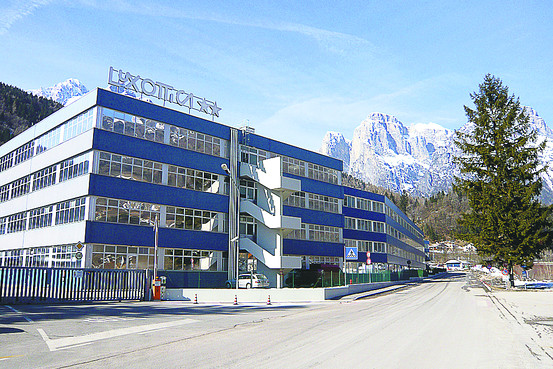
Luxottica...an eye for vertical integration

Luxottica HQ in Italy
While the debate on disbursed supply chain and contract manufacturers rages on...a small lux company from Italy has emerged as the champion of vertical integration and retaining key SCMluxe elements in-house. Luxottica is a $8billion eyewear company almost monopolising the eyewear market with a 80% market share. What is interesting about Luxottica apart from its impressive market share and growth rates of about 20% yoy is that it retains full control over the supply chain of its iconic in-house brands like Ray-Ban, Oakleys and Vogue and licensed ones like Burberry, Chanel, Dolce & Gabbana and others.  It has retained production in-house with six manufacturing facilities in Italy, as well as one plant in the United States and Brazil, and two in China. The China facilities again cater to the exploding Asian markets. Distribution is also kept in-house with 2 distinct segments - wholesale and Retail. In the Wholesale distribution segment the Company's products are mostly retailers of mid- to premium-priced eyewear, such as independent opticians, optical retail chains, speciality sun retailers and duty-free shops and are sold under the brand Oakley. The retail distribution operations are carried out through such brands as LensCrafters, Pearle Vision, OPSM and Sunglasses Hut and is again a prominent landmark in most duty free sections of airports. Obviously this strategy has helped Luxottica rake up business and keep the growth engine well-oiled (20% growth expected this year). But will it lead to improved perceptions amongst customers and brand equity or will the entire eyewear market be seen as a luxottica world with no differentiation?

Saturday, 2 March 2013

Fake or Counterfeit - Whats the difference?

Both fakes and counterfeits are a huge concern in the luxury industry, but is there a difference between them? Yes, and knowing the difference can make a huge difference to how a lux company would deal with the problem at hand.

Fake: These are products which have the brand name on it but no attempt is made to hide that it is not the "real thing". Either the product is not a part of the lux brand (say a Rolex perfume or suit) or is made with a different design or made with such inferior raw materials that customers are in no doubt to the product being not the real McCoy. Fakes are also sold as such very openly to customers in designated markets (albeit shady ones) as a fake or replica at a much lower price. Customers go to these markets with the intention of buying a fake.

Counterfeit: These are products that are made and sold as the genuine product on unsuspecting customers. The product quality is maintained (mostly) and sold in regular lux retail outlets. The price is also not discounted as in Fakes. The customer also has no knowledge that the product is not geneuine.

A market of Fake Chanel bags
Obviously for the luxury industry, the overiding concern are the counterfeits. Lux industry is generally not too concerned with fakes since sales are generally not lost due to it. Customers who buy fakes have no intention of buying the real product and are not the lux industry's customer base. But every counterfeit sold is a direct hit on the lux company's topline and a blow to customer satisfaction in the long run due to inferior material or lack of branding due to loss of exclusivity caused by flooding of the market. Lux company's now take counterfeiting seriously and have taken several measures to put a stop to it. Since counterfeiting involves a larger and more sophisticated facilities for manufacture, the industry is teeming up with local governments to tackle the same.

The new Chanel store
On an interesting side note, Michele Norsa, the CEO of Ferragamo states that the Chinese customers are the most astutue customers when coming to identifying counterfeits. The level of awareness and much more than American customers. The average Chinese consumer typically investigates each purchase and takes an informed buying decision  only after being completely satisfied with the genueiness of the product.

Sunday, 2 December 2012

Subcontracting at LVMH brand categories (Part 2 of 2)

LVMH category sales 2011
The levels of subcontracting varies by products and is mainly dictated by factors such as governmental regulations, production processes, availability of raw material and the brand image/policy planned for a particular product. Since these can vary by company to company across geographies let us look at some of the categories of LVMH which can be considered as representative of absolute luxury.

Wines and Spirits:

Inclusive of champagne, cognac and other liquers this category is strictly bound by unique regulations like geographic indicators (Appellation d’Origine Contrôlée, for champagne) which limits the production area and the amount of subcontracting that can be done given the need to procure produce from this limited supply. LVMH like most luxury houses sub contracts only the bottle handling and storage operations. The blending of the stock based on harvests allocated to the company will be done inhouse

Fashion and Leather Goods:

The defining feature of the fashion and leather goods market is its seasonality and …. Everyone wants next season’s bag or dress. This decreases the lead time available for the retailer, increases cost of inventory and high product variation leads to lost sales if the right merchandise is not available at the store. Although this would indicate all out subcontracting as a policy, the importance of quality and brand guidelines for luxe products prevent 100% subcontracting. LVMH follows a judicious strategy with all design and distribution being kept in-house to ensure strict compliance to quality and brand image of the product.  Production on the other hand varies by brand with an average of 45% being sub contracted. The difference between mass merchandising and luxe retailers are that this sub-contracting is usually done in the country of origin (Italy, France and Spain in the case of LVMH) and not in China! The variation in level of sub-contracting would depend entirely on the brand strategy for that particular product (Refer post Outsourcing)
 

Perfumes and Cosmetics:

A proliferation of brands and very high volumes define the perfumes and cosmetics industry. These factors make economies of scale an attractive proposition for support functions such as distribution and logistics. LVMH has centralized its production of perfumes to two centers in France but leverages a shared service center for all brands at Saint-Jean de Braye (France) and currently subcontracts only 9% of manufacturing. The large number of SKUs is managed by using postponement techniques (but not incorporating mass customization – Refer: mass customization in the perfumes industry)

 Watches and Jewelry:

Production of watches is in the stronghold of Swiss workshops with little of over 10% sub-contracting.  Though some design is outsourced to other studios, LVMH retains much of the design process within its studios. This low figure may also be due to the acquisition of ArteCad and Profusion (Swiss manufacturers of watch components) recently. Since LVMH does not represent the big names in luxury watches or jewelry this category may not reflect industry attitudes to subcontracting. 
Thus though the level of subcontracting depends strongly on the brand strategy for the particular product, other factors such as seasonality, statutory regulations, lead times, volume of business all play an important part. Even where sub-contracting is used extensively (Fashion, Leather goods) a modified and much finer version is used vis-à-vis traditional sub-contracting. i.e more control, local sub-contractors and iron clad contracts are used.

Subcontracting at LVMH (Part 1 of 2)

Supply of raw material and production of goods for a luxury product is the key to maintaining quality and brand value of the product. The sources of supply and the level of subcontracting in SCMluxe will hence differ from the traditional retail supply chain. One difference which is obvious is the high level of subcontracting that can be envisaged in the supply chain of mass produced goods. The sources of supply are also far flung with little semblance to the country of origin. SCMluxe on the other hand would have local suppliers and lower levels of subcontracting (Refer Sourcing the Zara Way). However what surprised me was the wide difference in each of the product categories with respect to subcontracting. A study of LVMH showed the below figures

Product or Brand Category
Subcontracting as a % of Cost of Sales
Wines and Spirits
N.A
Fashion and Leather Goods
45%
Perfumes and Cosmetics
9%
Watches and Jewelry
10%

 What makes the level of subcontracting in the fashion and leather goods business so much higher than other product categories? Is it due to the larger volumes, nature of production or simply volatility of demand that makes it easier to subcontract than product from one’s own facilities? Any suggestions or answers from SCMluxe experts? Send across your thoughts and let’s incorporate it in a more detailed investigation of LVMH’s supply chain in the next few posts

Tuesday, 30 October 2012

Online Campaigns…..tailoring it to the audience

Though web and online portals are mainly used as channels for informing the customer and maintaining the brand of the luxury product (Refer E-Commerce for SCMluxe) , it is is an important tool of communication and the eventual buying decision. So an interesting study on the response of men and women to email campaigns by luxury goods caught my eye. The main differences between the sexes observed in the study were:


Luxury Chicks - funny or blase?
  • Men click on links that are buttons or images more than on text. Whereas women tend to click on links which are “text”
  • Women find “day in life” or messaging that conveyed a lifestyle. Men on the other hand preferred funny or witty messaging which was delivered in a quirky fashion
  • And finally, men are more likely to open an email ad and respond to it than women would
Personalization of email campaigns especially with respect to subject, title, messaging and formatting is important to reach the target audience – hence we see Martha Stewart style images for home and fashion campaigns and Benetton features provocative messages. As to the links in the emails…do we do text or buttons …or is this all sexist nonsense in an increasingly egalitarian world?


Sunday, 23 September 2012

Showrooming...what is it? and will it impact SCMluxe?

Brick and motor retailing involves not just an exchange of goods and services for a payment but providing the customer an experience of the product being sold. This is especially true in the luxury sector where the customer would like to experience the product, its values and the dream that is being propagated via the brand. Thus we see that luxury showrooms are opulent, carefully designed to provide the customer with this “experience”. This of course does not come cheap – it involves large overheads in designing, maintaining and running the showroom.
Traditional business has found online sales as a means to reduce these overheads. Once a brand is established, the e-commerce engine or web portal reduces the overheads of retailing to an almost negligible amount.  This leads to the ability to offer better prices/discounts online and hence we see the rapid growth in web sales on e-stores as compared to regular brick and motor stores. A recent phenomenon is one in which premium products where the customer would like to experience the product (fashion, watches, jewelry, high end electronics) in the showroom but avail of the better prices (due to lower overheads) offered on online e-stores. This leads to the concept of showrooming…where the customer visits the physical stores to experience and evaluate the product but buys it online. This increases footfalls in stores but with no conversion – the beneficiary being the e-store. 
Making sure window shopping is converted into actual sales?
Retailers have fought back by awarding loyalty points for in-house sales, deploying  innovative offers like mobile applications (see www.shopkick.com) which track and offer savings and points (kicks) which can be reclaimed for goodies in other stores  and in rare cases maintaining price disparity between online and offline sales channels to a minimum.
Luxury retailers have so far not been overtly affected since online sales channels are not actively used and price differences are kept artificially high (in e-stores). We also see that since experience and price is the deciding criteria for the luxury customer, we might not see customers resorting to showrooming. But in these recessionary times when even luxury is seen through the eyes of “value for money” will we see this phenomenon extending to the luxe sector as well? How will retailers react to it and what will be the impact on SCMluxe? Any thoughts or opinions?

Stock Outs and SCMluxe

Stock outs have always been used as a measure of the effectiveness and risk levels of a supply chain. This is mainly due to the retail sector wherein no stocks on the shelf mean a sale  (and revenue) lost forever to a competing product on the shelf. The manufacturing sector also uses stock out metrics to judge the risk levels of a particular inventory plan. For example, critical products like spare parts which B2B customers want on an immediate basis will have a zero stock out policy. This is since spare part non-availability or delay can mean the customer’s production line will have come to a halt. Hence these critical stocks always have very high safety stock levels vis a vis other less critical products. Generic products which can be substituted will follow a more aggressive stocking policy with lower safety stocks. What about the luxury industry? Do they segment products similarly?


IWC Exupery platinum watch. Note the serial number 01/01
limiting production to one piece to be auctioned for charity

As very nicely elaborated by Kapferer and Bastien in thier seminal  book "The Luxury Strategy" the luxury industry believes in limiting supplies to make the brand more desirable. Hence stock outs may not be viewed as entirely a lost sale (as in mass retail) but more as an addition to its brand value. Segmentation is the stock out strategy (or the tolerance towards it) is seen in the luxe industry as well. Limited edition products in absolute luxury categories are the norm. We see limited edition watches, chinaware (where the moulds are ceremoniously broken after production reaches a target volume) all the time to either commemorate a special event or simply to create a uber luxe and highly desirable product.  Similarly prestige brands are typically kept in short supply during introduction to keep interest from flagging and demand being satiated by flooding the market. Apple stores typically have long lines of eager customers camping outside stores on the eve of the launch of the new iPhone or iPad. Online sales are started much later in the sales cycle. Masstige brands on the other hand will start off with  both online and store sales with maximum volumes to ensure the market is fully exploited before competition is able to launch similar products and capture market share.
French aviator Antoine Exupery who gave us
"The Little Prince" and the inspiration for IWC

This segmentation of the stock out policy also has another important angle in SCMluxe – the ability to dispose off over stock. For uber luxe products (Refer post Disposing Overstocks) there is no channel for profitable disposal other than destruction of the product. Hence working on a tolerant zero stock policy by restricting supply also helps cut such losses from overstocking. Prestige and Masstige products on the other hand have channels for disposing excess stock in a more profitable manner and hence can afford to have less tolerant zero stock policies with more safety stocks built into the inventory plan

Wednesday, 15 August 2012

Roundtripping stock ... What is it? and why is it done?


Expensive inventory
Luxury goods inventories are expensive ...i.e not just the finished goods but also the raw material inventories. For most sub contractors or suppliers to luxury goods companies, this poses a peculiar problem - obtaining and managing credit lines. Though this is a problem faced by most upstream supply chain partners, in SCMluxe the problem is compounded by several factors such as:
  •  higher working capital due to high cost of inventory
  • seasonality in sales leading to stock pile up
  • cash inflow not matching the outflow
  • much longer cash cycle times
Hence SCMluxe suppliers are constrained in obtaining higher credit lines or getting them during the off-season when sales are low but production needs to be kept running to prepare for the high season.....roundtripping is one solution (albeit not entirely legal) that they adopt to manage the cash flow. This simply involves "selling" inventory to in-house units and then bringing it back after a certain period to avail higher credit lines from banks or financial institutions

An example will make this much clearer. Diamond polishers tend to have high stock of goods during lean times - especially with the current crises in the US and European markets. The hope is for the coming Christmas/holiday season or the "coming"  economic recovery to boost sales. To manage credit lines till then, these suppliers will parcel out large tranches of high value stock (large carat diamonds) to willing downstream partners (wholesalers/distributors) or in-house units. Higher credit lines are then obtained from the bank based on these higher reported sales. The stock is then bought back to the company either through returns or other such means (rework, to add further value by setting in jewellery etc). The downstream partner may or may not be compensated by a small token amount for his complicity. This process of "roundtripping" was specially predominant in Indian polishers till the government clued onto it and introduced a nominal import duty of 2% to curb such practises.

Saturday, 21 July 2012

Swimming against the tide…Chinese luxe in Europe

While the stampede of western firms to sell to the seemingly insatiable Chinese market continues, a relatively unknown (atleast in Western markets)  Chinese luxury goods manufacturer is trying to forge a market in Europe.  An interesting fact is that Bosideng is not a manufacturer of typical “Chinese luxury” products such as silk or tea but is aiming at creating a global brand that is culture agnostic and appeals to the generic consumer of luxury products. With over 7579 retail stores and a market share of 36% in China, the company now seeks to move up the value chain by selling high quality clothing (with brands like Bengen, Snow flying and Kangbo) that would appeal to all well-heeled customers irrespective of their location (similar to the demographics of consumers like Christian Dior or Hugo Boss – a broadly homogenous well-travelled, mobile and high spending category of the privileged)
Red by Bosideng
Though there are some oriental touches to their fashion line, like the use of red piping on suits for instance, it is far too subtle to be plugged as “oriental”. It would be interesting to see how such a company would plan and execute its supply chain strategy while trying to move up the value chain – would it use abundantly available low cost labour and manufacturing in China? Would procurement be local or global or glocal? What would be the inventory stocking models? Let us look at some initiatives of Bosideng in SCMluxe while it is in the process of opening of its very first store in Europe in London’s trendy South Molten Street:
v  Procurement (or source) for the high end fashion line is from suppliers in Italy, Turkey and Portugal
v  Production (or make) is entirely out of Europe with only 7% being manufactured in China
v  Designers are commissioned from leading western brands such as Nick Holland and Ash Gangotra from the label Pretty Green
v  The main collection is restricted to 50 pieces at a time, so that new products are refreshed in the store on a weekly basis. This calls for a high inventory turnover and low levels of obsolete (out of fashion?) stock. Weekly refreshment of the collection will mean tighter controls over inventory and very short lead times. With manufacturing being local, logistics will be faster and simpler but demand forecasting will need to be very robust. Bosideng will have to err on the side of lower inventories risking stock outs. However in the luxury goods industry, stock outs may be a good for the brand?
South Molten Street, London
v  An all-out splurge on the retail store. With an estimated £6 million ($9 million) spent on its new property on South Molten Street, Bosideng is using a high cost sales channel instead of the cheaper option of using department stores (store in store).  This is because getting premium space for a newcomer is difficult in department stores  along with the problem of limited branding freedom
v  Alternative E-Commerce sales channel to be launched with a dedicated website for Europe. This move is to counter the twin challenges of a standalone retail store – (i) High Cost (ii) Low accessibility. The web sales model helps customers who cannot travel to the retail store locations as well as provide a cheaper option for sales
Obviously the above model of SCMluxe calls for deep pockets and staying power since the return on investments will take time. Will this high cost contra-indicative strategy of wading into a troubled market like Europe while the rest are heading East make profits? Or is it a well thought out strategy to establish a Chinese brand in the luxury market where these high costs may well be thought of as a part of the branding budget? Another interesting thought allied to this will be how the Chinese markets will be serviced with the above SCMluxe strategy? Currently Bosideng claims that for its high end suits, tweed is procured from European suppliers and shipped to China for tailoring before it comes back to Europe for the final finishing touches. Will this work for the Chinese market and will consumers want to purchase a local product at western prices? Bosideng may well provide us with an example of how the great leap East will play out…

Thursday, 5 July 2012

Quick comparison of SCMluxe Retailing formats

While we have discussed retailing of distribution (Deliver) formats in posts (SCMluxe downstream part 2 and part 3), let us look at a quick comparison of the three formats in a tabular format for ready reference


Retail Sales Channel
Stand Alone Store (Boutique)
Store in Store (Department store)
Web Store (E-Commerce)
Cost
High
Medium
Low
Brand Value
High
Medium
Low
Accessibility for customer
Low
Medium
High
Flexibility in operations
High
Low
Medium
Control over operations (manage brand and communication independently

High

Low

High
Footfalls
Low
Medium
High
Footfall to order conversion rates
High
(target footfall)
Medium
(both targeted and accidental footfalls)
Low
(mainly used to check out and compare product)


Though above is open to interpretation and in general self explanatory, if any readers want points above to be made more explicit, please write in and I'll be happy to have a more detailed post on this

Thursday, 21 June 2012

Catering to the B2B luxury market

The focus of the luxury goods industry is normally on B2C sales with all distribution and communication strategies centered around the end consumer (retail stores, brand communication, pricing etc). However there is a large market in B2B as well. These comprise of two main types:
  1. The product as a component of another product (eg. automotive audio/video players or glassware for perfumes)
  2. Products sold to large businesses in bulk volumes (champagne to restaurant chains, cosmetics to airline or hotels)
Does SCMluxe vary from B2C to B2B. The answer is a resounding YES!

Some of the characteristics of SCMluxe for B2B that distinguishes it from the more common B2C value chain are: 
Champagne container for shipping

  1. Packaging and Retailing - Packaging is aggregated in bulk - for eg. pallets, containers so that space is saved and transport is easier. The retailing end of the chain focuses less on presentation (this will happen when B2B finally gets converted into a B2C sale
  2. Quality checks are conducted by buyers and sampling plans and inspection becomes routine
  3. Vendor managed inventory and JIT or contract manufacturing is more in vogue and margins are generally smaller
  4. Design is mostly dictated by the buyer and hence controlled minutely. R&D plays a smaller role except in initiatives to control cost 
    Champagne container at a Michelin restaurant
    
  5. Procurement is demand driven and inventories can be better controlled since demand is known and predictable (forecasting and minimum offtake contracts with buyer can be negotiated)
  6. Less focus on branding and retailing
However SCMluxe for B2B has the same pros and cons as the generic SCM - a trade off between assured markets/demand and higher volumes against lower margins vis a vis the more unpredictable but more profitable B2C supply chain. Strategies for B2B hence focus more on controlling costs and enabling the handling of large volumes (with minimum costs) so as to maintain razor thin margins. The ability to do so will provide competitive advantages for the leaders to stand out and succeed in an increasingly challenging business environment.